




Battery separators formed from aramid nanofiber.
Nanostructured para-aramid — one ten-thousandth the width of typical aramid fibers — assembles to form a separator thinner, stiffer and more heat-resistant than leading commercial polyolefin separators.
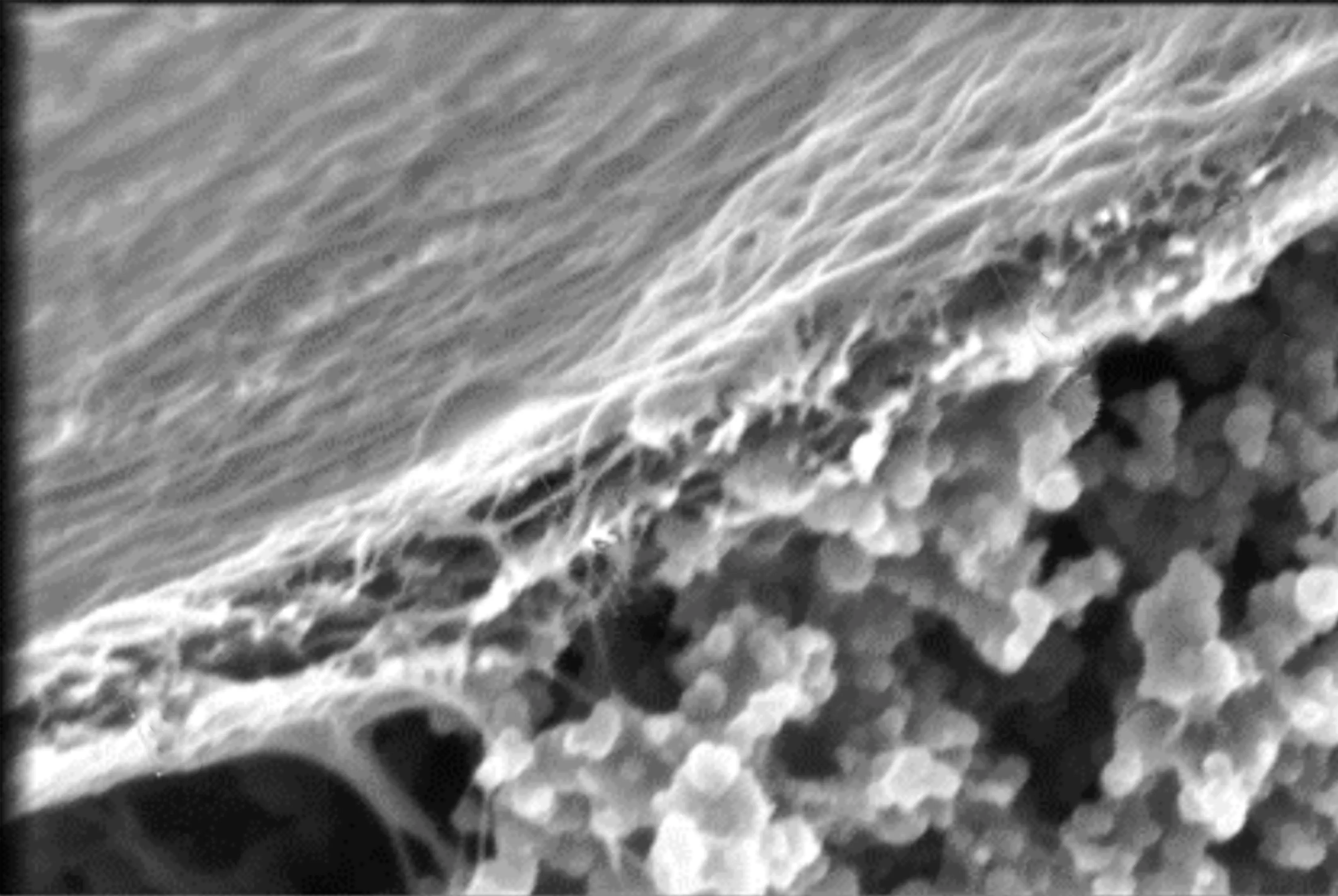
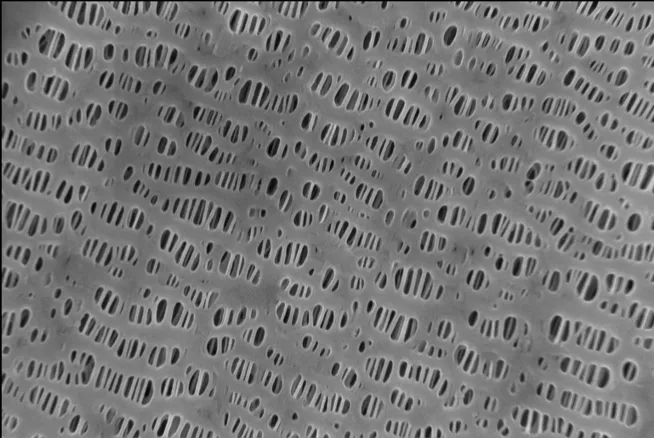
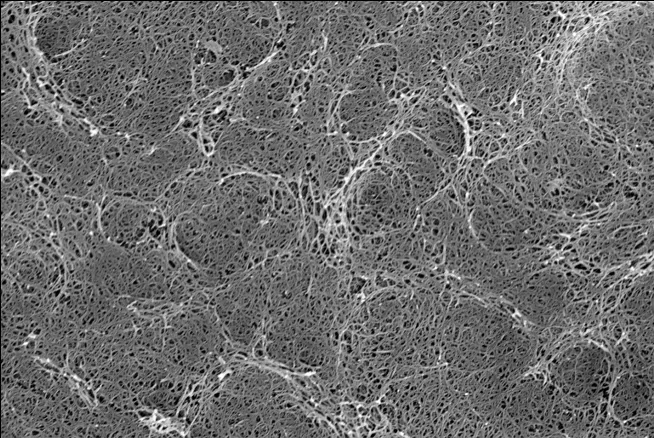
ARACHNE differs structurally from polyolefin separators.
Both surfaces imaged on the same microscope at 35 000×. Stretched polypropylene opens slit-shaped pores; ARACHNE is a continuous mesh of aramid nanofibers.
ARACHNE 25, quantified.
Valerion's 2.5 µm free-standing para-aramid nanofiber separator benchmarked against two commercially available separators. Vendor-reported values vs. ARACHNE in-house data.
Technical data sheet · rev. Oct 2026
| Property | Celgard 2500 | Gellec UltraThin | ARACHNE 25 |
|---|---|---|---|
| Material | PP, dry-stretch | Wet PE + ceramic coat | Para-aramid nanofiber |
| Thickness | 25 µm | 9 µm PE + 3 µm ceramic | 2.5 µm |
| Melting point | ≈165 °C | ≈135 °C | None; carbon decomposition at 574 °C |
| Heat shrinkage | 1.1 % MD, 105 °C | 1.4 % MD, 90 °C | 0.1 % at 250 °C |
| Tensile strength (weakest axis) | 12.7 MPa | Not available | 177 MPa, isotropic |
| Young's modulus | ≈0.5 GPa | Not available | 8.8 GPa |
| Puncture strength | 3.2 N | 3–10 N | 5.4 N |
| Porosity · Gurley | 55 % · 200 s | 40 % · 80–400 s | 27 % · 430 s |
| Areal resistance | ≈2.3 Ω·cm² | Not available | ≈0.7 Ω·cm² |
| Maturity | Commercial | Commercial, GWh scale | Low throughput pilot line, scale PoC |
ARACHNE 25: Valerion in-house measurements on engineering samples; preliminary, indicative values.
Gellec: published table for its 9 µm PE base film; puncture and Gurley are product ranges.
Celgard 2500: datasheet (rev. 10/21).
ARACHNE application advantages.
ARACHNE 25's characteristics translate to improved battery performance in critical areas.
- High-energy EV
- Reclaim separator volume; highest 0.1C capacity in our NMC811 tests.
- Safety-critical packs
- No melting point, 0.1% change at 250°C, self-extinguishing [4].
- Fast charge
- ≈30% lower impedance than Celgard 2500; 9° electrolyte contact angle.
- Li-metal · Li–S · Na-ion
- Dendrite suppression; 3,500+ Li–S cycles demonstrated [2,3].
- Solid-state & polymer
- ANF scaffold reinforces thin polymer and gel electrolytes [5]. Enables aSEI formation.
- Structural battery designs
- Load-bearing membranes for drones, eVTOL, wearables [5].
Investors
Backed by domain experts and regional investors.
Team
Aramid nanofiber pioneers from the University of Michigan, paired with experience in venture capital and technology translation.


News
 Valerion Energy presents at Biomimicry Ray of Hope Demo DayBiomimicry Institute
 Valerion Energy founder Nicholas Kotov elected to the National Academy of EngineeringCOMPASS Center, University of Michigan
 HEST Investments partners with Valerion to revolutionize battery technologyPR Newswire
 Valerion Energy selected for the Biomimicry Ray of Hope AcceleratorBiomimicry Institute
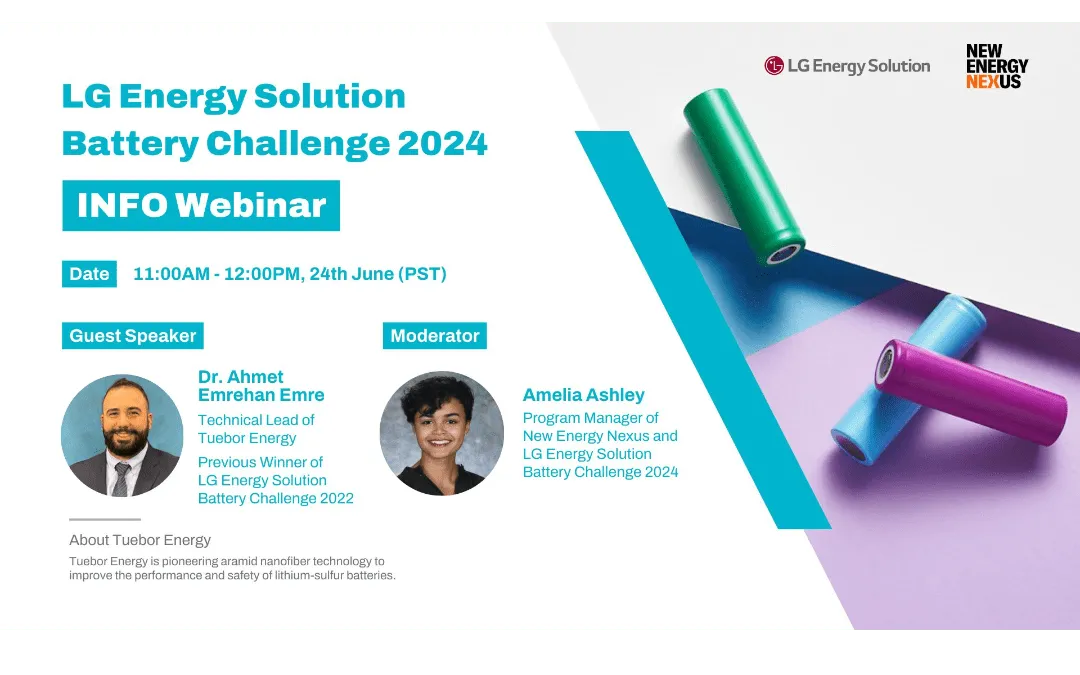 Valerion co-founder Dr. Ahmet Emre to speak at LG Energy Solution eventAnn Arbor
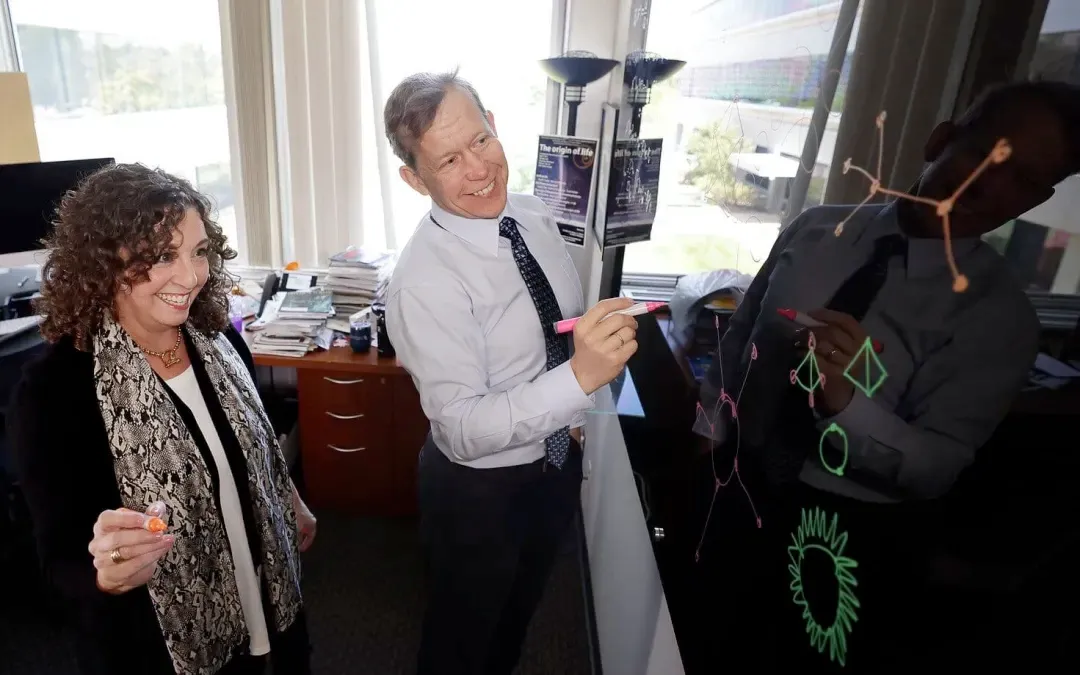 Valerion Energy founder leads NSF center for nanotechnologyMichigan Engineering News
 Valerion Energy selected as finalist in LG Energy Solution Battery Challenge 2022Ann Arbor
 Valerion Energy team presents at AUSA conferenceWashington, D.C.
 Pass-ION Nano (UK) wins xTech International Accelerator awardAnn Arbor
 Valerion Energy founders publish key findings in Nature CommunicationsNature Communications
References
- [1] Yang M. et al., ACS Nano (2011)
- [2] Tung S.-O. et al., Nat. Commun. (2015)
- [3] Wang M., Emre A. et al., Nat. Commun. (2022)
- [4] Patel A. et al., ACS AMI (2020)
- [5] Wang M. et al., Sci. Robot. (2020)